
Tanzania travel guide
When to go, what it costs, what to pack and how the Great Migration actually moves. Written by the people who run the trips.
When to visit Tanzania
Tanzania has two dry seasons and two wet ones, and the northern circuit works all year. The question is not whether to come but what you want to see.
June to October, the long dry season
The classic safari window. Vegetation thins, water sources shrink and animals concentrate where you can find them. Roads are firm, skies are clear and the Mara River crossings happen from late July. This is also peak season, so camps cost 30 to 50 percent more and book out six to nine months ahead.
November to December, the short rains
Brief afternoon showers rather than all-day rain. The landscape greens, migratory birds arrive and the herds move south towards the Ndutu plains. Quiet, good value and a favourite of guides.
January to March, calving season
The best-kept secret of the Tanzanian calendar. Around 8,000 wildebeest calves are born per day at the peak on the southern short-grass plains, and predator activity is the most intense of the year. Warm, mostly dry, dramatic skies and far fewer vehicles than August.
April and May, the long rains
Heavy, sustained rain. Some camps close, tracks become difficult and game viewing is harder. Prices fall sharply and the landscape is beautiful, so it suits flexible, experienced travellers rather than a first safari.
Where the Great Migration is, month by month
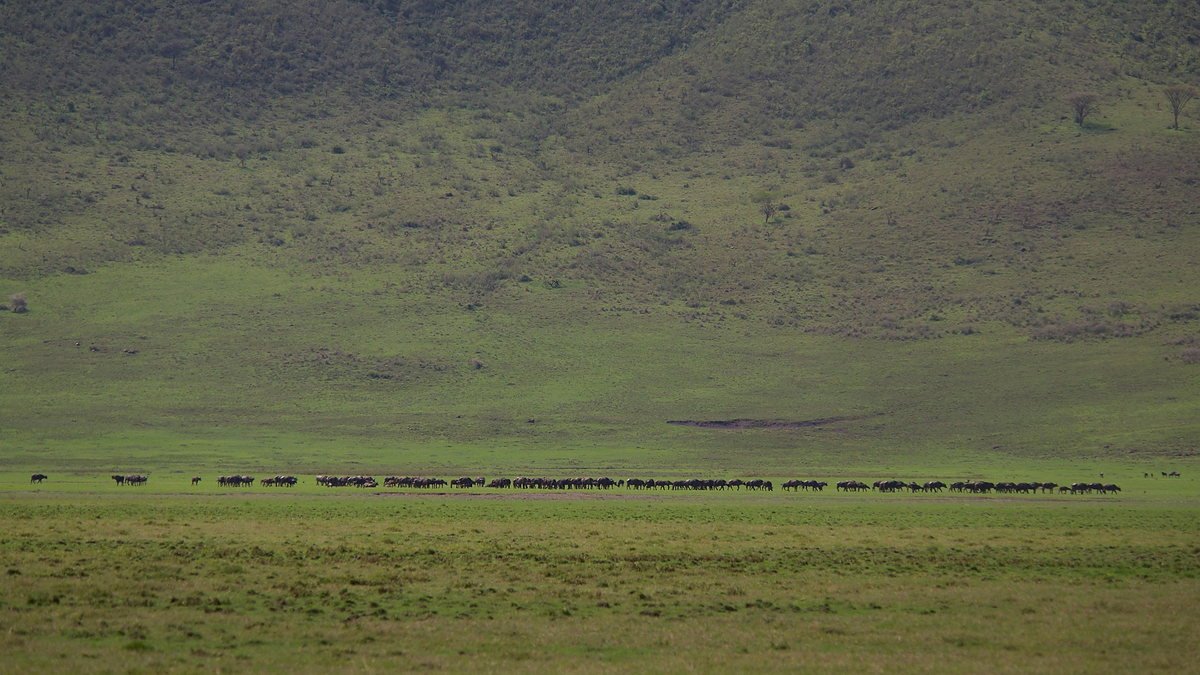
- December to March: Southern Serengeti and Ndutu. Calving season.
- April to May: Moving north west through the central Serengeti.
- June: Western corridor and the Grumeti River crossings.
- July to October: Northern Serengeti and the Mara River crossings.
- November: Turning south again through the Lobo and Seronera areas.
These are patterns, not timetables. The herds follow rainfall, and rainfall varies each year. Any operator promising you a specific crossing on a specific date is guessing.
What a Tanzania safari costs
Park fees dominate the cost of any Tanzania safari, and they are identical for every operator. The Tanzania National Parks Authority sets entry fees per person per day, and the Ngorongoro Conservation Area Authority adds a separate vehicle service fee for descending into the crater. Those fees are payable before a single night of accommodation, which is why a Serengeti and Ngorongoro trip is never cheap, whoever you book it with.
Beyond the fees, what moves the number most is where you sleep and how long you stay:
- Camping safaris put you in seasonal or public campsites. The wildlife is identical, the comfort is not.
- Mid-range lodge safaris use permanent lodges and tented camps with proper beds, hot water and good food. This is where most of our guests land.
- Luxury safaris buy location above all else: camps inside the parks, so you are at the gate before the day visitors arrive.
- Ultra luxury and private conservancies add exclusive-use camps, off-road driving and night drives that are not permitted inside the national parks.
Two things affect cost as much as the standard of camp. Travelling in the June to October high season costs more than the green season for the same itinerary. And a group of four splits the vehicle, guide and fuel four ways rather than two, which changes the per-person figure considerably.
We do not publish per-day rates, because a rate that is honest for a June Serengeti trip is misleading for a March one, and quoting a low headline figure and adding extras later is a practice we would rather not copy. Send your dates, group size and the standard you have in mind, and you will have an itemised quote within 12 hours showing exactly what is included.
One warning worth taking seriously. If a quote is far below everything else you have been sent, something is being cut, and it is usually the vehicle age, the guide experience or the porter wages. Ask any operator to itemise park fees separately from their own costs. A straight answer tells you a lot.
Visas and entry requirements
Most nationalities need a visa. Apply through the official Tanzanian immigration eVisa portal roughly two to three weeks before travel, or buy one on arrival at Kilimanjaro International Airport. The fee is set by Tanzanian immigration, and United States passport holders pay a different rate under a separate visa class. Your passport must be valid for at least six months beyond your arrival date and have two blank pages.
A yellow fever certificate is required only if you are arriving from a country with a risk of transmission, which includes Kenya. Arriving directly from Europe or North America, you will not be asked for one.
Health and vaccinations
Speak to a travel clinic six to eight weeks before you fly. Hepatitis A, typhoid, tetanus and diphtheria are commonly recommended. Malaria prophylaxis is advised for the parks, though the Ngorongoro crater rim is effectively malaria free due to altitude. Bring repellent with DEET, long sleeves for dusk and a basic first aid kit.
Comprehensive travel insurance is a condition of booking, and it must cover emergency medical treatment and evacuation. Tanzania is a large country with long distances between parks and hospitals, so this matters more here than on most trips. Bring the policy number with you.
What to pack
- Neutral colours: khaki, olive, beige, brown. Avoid blue and black, which attract tsetse flies.
- Layers. Mornings in the crater can be 8C and afternoons 30C.
- A fleece or light down jacket for early game drives.
- Wide-brimmed hat, sunglasses and high-factor sunscreen.
- Binoculars, ideally 8x42. The single item guests most regret leaving behind.
- A soft-sided duffel if your trip includes light aircraft, which limit you to 15kg including hand luggage.
- Spare camera batteries and a power bank. Vehicles have charging points but camps may run generators only at set hours.
Tipping
Tipping is customary and genuinely appreciated, but always at your discretion. We send suggested amounts by role in your pre-departure pack, so you are not left guessing. Who to tip, and how:
- Safari guide: tipped by the group rather than per person, at the end of the trip.
- Lodge and camp staff: into the shared tip box, so it reaches the kitchen and housekeeping too.
- Kilimanjaro crew: tipped as a whole team and distributed by role, from lead guide to porters.
Money and payments
US dollars are widely accepted for tourism, but notes must be series 2009 or later or they will be refused. Tanzanian shillings are needed for markets and small purchases. ATMs in Arusha and Moshi are reliable; there are none in the parks. Credit cards work at lodges but often carry a 3.5 to 5 percent surcharge.
Safety
Tanzania is a stable country and tourism is central to its economy. The safari areas are well policed. Normal urban precautions apply in Arusha, Moshi and Dar es Salaam: keep valuables out of sight, use hotel safes, and take a taxi rather than walking after dark. On safari, stay in the vehicle unless your guide says otherwise, and never stand up through the roof hatch when close to elephant or buffalo.
Connectivity
Vodacom and Airtel SIM cards cost a few dollars and work well in Arusha, Karatu and around Seronera. Coverage elsewhere in the Serengeti is patchy. Most lodges and camps offer wifi in the main area, though speed varies from adequate to ornamental. Your guide carries a satellite phone for emergencies.
Ready to plan?
Send your dates and we will tell you honestly what that month will look like on the ground.